
- shanshui@shanshuizg.com
- We Will Respond to Your Inquiry Within 24 Hours of Receipt!
Leave Your Message
- Phone
- E-mail
- Whatsapp
- Wechat

Today, recycling and sustainable practices have become more critical than ever in the eco-conscious world. Glass aggregates can be recycled to reduce waste and ensure more sustainable living. Thus, finding an efficient manufacturer for your Glass Particle Recycled requirements are necessary to ensure that your process is both effective and well suited to your production purposes. This process, besides benefiting environmental causes, also turns out to be a good and healthy business opportunity for organizations that want to get into greener practices.
In this regard, Henan Shanshui Heavy Industry Technology Co., Ltd., from Henan, China, has been a pioneer of eco-friendly machinery since 2013. The company specializes in the research and development of advanced recycling equipment, including lines for waste Solar Panels and lithium battery recycling. This is the principle that the company stands on regarding recycling innovation. Relying on dependable manufacturers such as Henan Shanshui ensures an environmentally sound as well as economically rewarding process of turning glass into particles.

Glass Recycling has become an imperative in the global efforts to lessen the burden upon the environment by waste. News has it that local glass recycling plants have been set up to process as much as 50 tons of glass each day, breaking it down into finer particles for various applications. The technological innovation reemphasizes an effective recycling approach that minimizes landfill waste while enhancing materials' sustainable use. By creating a series of new regulations, for example, with respect to the glass recycling of products, to ensure the proper disposal of glass by manufacturers and importers, the industry is evolving. These initiatives aim to create a circular economy where the glass is reincorporated into use instead of sent to a landfill, thus reducing the negative impact on the environment. The blending of recycled glass particles into soil mixtures is another new trend where waste is being turned into opportunities for agricultural practices; that, too, adds value to glass recycling for sustainable solutions.

There can be nothing more relevant than this issue while focusing on manufacturer choices for recycled glass particles. Establishment of local glass recycling facilities capable of processing up to 50tons of glass daily highlights the significance of dealing with manufacturers who are sustainable and maintain international quality standards. This ensures that recycled products are specified to industries and do not compromise the environment.
The demand for high-quality recycled glass is continuously on the rise, as newly released studies indicate crushed glass particles can serve as an ingredient in soil mixes for the betterment of plant growth. Such resources, produced by manufacturers investing in advanced recycling technologies, may be placed for agricultural application. By prioritizing the partnership of differently responsible manufacturers, industries would thus help in creating a circular economic system while resolving concerns on waste management.
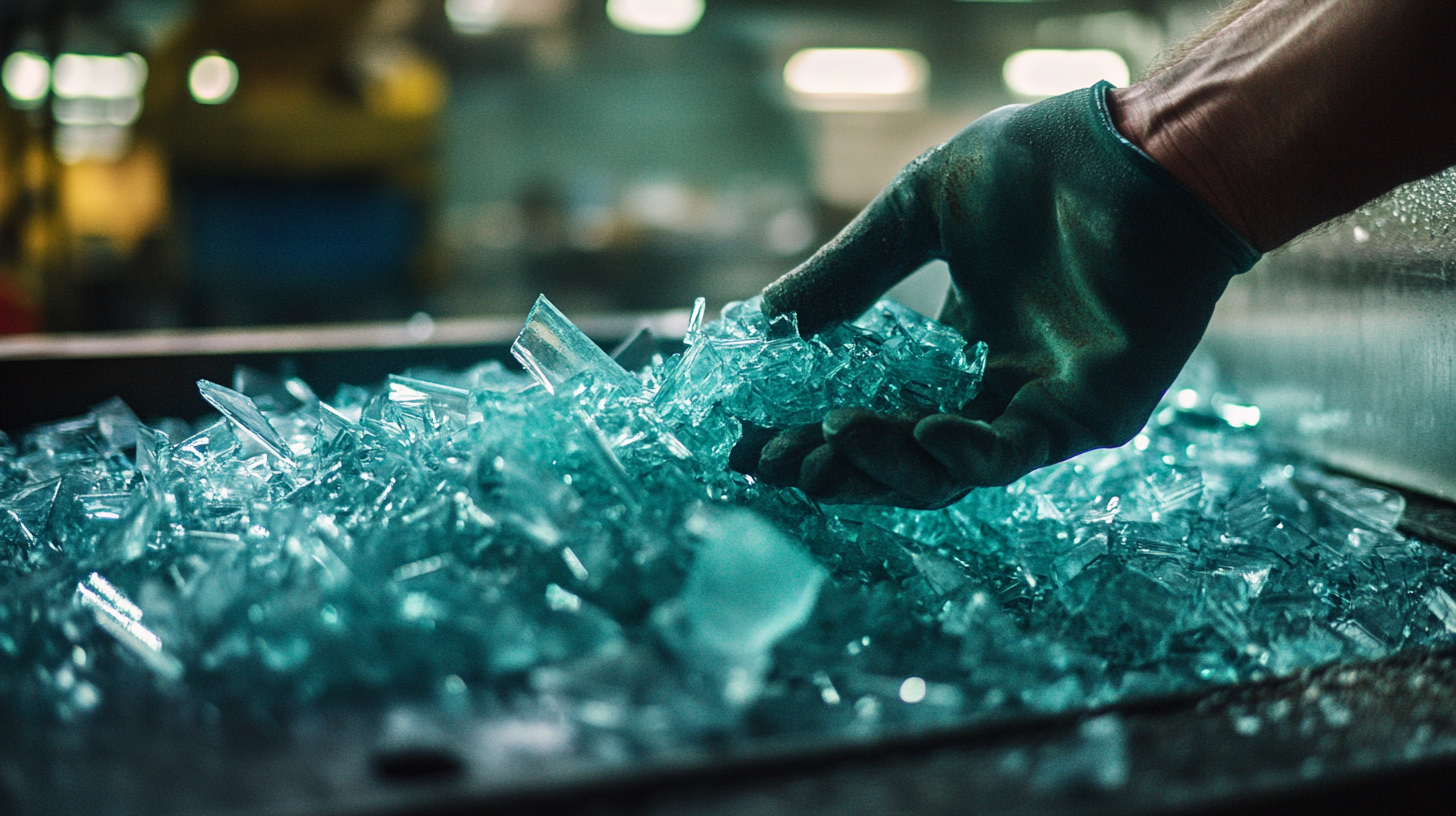
There are critical considerations to take into account when choosing a manufacturer for glass particle recycling. It is important to note that recently China's first photovoltaic module recycling pilot line shows that the industry is now turning waste into something useful. With the expanded solar energy sector, so do manufacturers realize their responsibility towards sustainability practices such as effective recycling of their products at the end of life.
Another ingredient for consideration is the meeting of requirements for waste management. Thus, from 1 January 2024 onwards, put into the hands of manufacturers or importers of used products like batteries or tires some percentages on take-back obligations. This pressure that regulations create makes a good case for partnering with manufacturers who meet eminently such take-back requirements and innovate in recycling processes to make them much more integrated and lower the environmental footprint. This clearly leads businesses to use the right manufacturers for their requirement of glass particle recycle while keeping it greener.

Thus, when looking at manufacturers of recycled glass particles, their certifications and standards become extremely pertinent. Such certifications define a manufacturer's willingness to produce quality materials and comply with all industry regulations, making the products solely environmental and performance-oriented. Recently, the pressure from regulatory bodies is steadily mounting on the need to adopt responsible recycling practices such that manufacturers should now have credible certificates to do their business.
All of the aforementioned convince interested manufacturers to adopt sustainable practices. Take, for example, the use of crushed glass in the development of growth substrates for plants as an application of novel recycling technology where improved quality of soil and sustainability is created. Such an approach in selecting your manufacturer will diversify a business's impact in the nurturing environment with such requirements of recycled glass materials.
It is important to consider the materials and processes involved in glass particle recycling when assessing production capacity and quality control. The quality of LCD substrates, for example, depends on the glass properties, which in turn affects the visual performance of competing technologies such as plasma and micro-projection systems. Thus, manufacturers should consider high-quality raw materials and equip their production facilities for the potential growing demand for recycled glass products.
Likewise, novel recycling methods such as converting waste glass into useful products show just how applicable these ideas on the circular economy are. Companies doing mechanical and chemical recycling of materials such as polyester could help sustainability by creating wider applications for the material. This intensifies the necessity for stringent quality assurance throughout the recycling process to ensure safety and performance of the product, which, consequently, instills consumer confidence in green alternatives.
There is now prolific momentum in forward movement for sustainable recycling of glass, spearheaded by high-level technology developments, such as light-based sensors. These consider advances that allow the sorting machinery to perform optimally in the application of quickly purifying crushed glass or cullet-a process primarily used for glass recycling. Efficiency wins here enable manufacturers to fast-track the recovery of waste glass from being recycled more efficiently and thus reduce environmental hazards from public glass waste.
New applications of recycled glass have been studied, such as in making ceramic floor tiles and as a filler in construction products. Such an application not only adds value to the recycling process but also plays a significant part in addressing the urban solid waste crisis in countries where waste is always in plenty. Industries will eventually fit in the shift necessary to go green while still keeping the businesses viable.
Cost and pricing structure considerations are important for a person making sound decisions among all manufacturers of glass particle recycling. Recently, a glass recycling plant sited locally served to demonstrate the feasibility of handling 50 tons of glass daily, turning waste into value-added particulate glass for multiple applications. This promotes sustainability, as it makes manufacturers consider alternative pricing models competitive with the capabilities and environmental impacts they may have.
With demand trends for recycled materials on the enterprising upward path, probably, manufacturers will offer diversified pricing structures depending on technology used, production efficiencies, or plaintiff quality. In other words, manufacturers choosing to run a low-cost operation might compromise with quality, while others using advanced technology might charge for their credentials. Hence, a glass particle purchasing company must weigh costs by comparing them with the gains provided by each manufacturer, and procures the balanced compromise between price and sustainability.
Most crucial, however, to any manufacturer that would seek to source recycled glass particles would be the customer support and communication channels. Communication would enable the manufacturers to really understand what was required from them by commercial entities that are interested in becoming potential clients in need of recycled materials. The need for a robust customer service function would then provide a fallback whenever issues arise, such as fulfillment of orders, quality control, and technical details related to recycled glass particles.
Modern technology advances in glass recycling bring to bear the need in these very areas. In addition to the first local plant for the recycling of glass into shapes of 50 tons a day, the other manufacturers will have to adjust to new legislation under which they will assume take-back responsibility from January 1, 2024. It means that open channels of communication become even more critical in this industry because such partnerships enhance and greatly improve efficiencies in the sourcing of recycled materials.
Strong customer support, therefore, helps to build trust and collaboration in this fast-changing environment. On account of the emerging complexities of mandatory recycling quotas for an increasing variety of products, the ability to ask and connect with manufacturers able to deliver top-quality materials as well as aid will become critical during this transition phase. Transparent communications will build these networks for finding more efficient solutions in an ever-competitive world of glass recycling.
Most crucial, however, to any manufacturer that would seek to source recycled glass particles would be the customer support and communication channels. Communication would enable the manufacturers to really understand what was required from them by commercial entities that are interested in becoming potential clients in need of recycled materials. The need for a robust customer service function would then provide a fallback whenever issues arise, such as fulfillment of orders, quality control, and technical details related to recycled glass particles.
Since case studies demonstrate how partnerships can drastically change glass recycling, an application is completely innovative in terms of its use of recycled materials. Recent research with recycled glass has developed concrete that, when tested in marine settings, performed significantly better than conventional concrete. The development indicates the potential in construction the recycled glass has and meets the sustainability criteria for resource utilization.
In addition to that, some recent studies on the mechanical properties of composite materials having waste glass and wood flour reported the increase in strength and thermal resistance. It can be used for many applications by incorporating finer glass particle compositions. Such success points are very much important from the viewpoint of cooperation between manufacturers and research studies in order to advance glass recycling toward a more sustainable future.
The solutions that recycled glass particles have for the future lie with innovatively coming up with new processes. According to new research, waste glass recycling has entailed a complex trajectory, especially concerning health risks from particulate matter and heavy metals from recycling. This calls for manufacturers to practice safer means of operation while also improving processing efficiency.
Another strong aspect of recycling glass is its incorporation into construction materials, an example being ceramic floor tiles. Innovative schemes of using ground glass are emerging not in the context of reducing waste but as a key ingredient in making sustainable construction materials. These trends indicate a future where recycled glass is not simply a byproduct but an actual investment towards building greener cities and assisting diversified industries.
Assessing production capacity is crucial to ensure that manufacturers can meet the increasing demand for recycled glass products while maintaining high-quality standards.
The quality of raw materials, such as the type of glass used, directly affects the final product's performance and visual quality, making it essential for manufacturers to prioritize high-quality inputs.
Innovative recycling techniques include converting waste glass into functional products, demonstrating the potential of the circular economy, and utilizing mechanical and chemical recycling methods for materials like polyester.
Understanding costs and pricing structures helps businesses make informed decisions, as different manufacturers may employ various pricing strategies based on technology, production efficiency, and product quality.
Establishing local glass recycling plants can process significant quantities of glass daily, contributing to sustainability efforts by transforming waste into valuable materials.
Effective customer support and communication ensure that manufacturers understand the specific needs of their clients, helping to address issues related to quality control and order fulfillment.
Manufacturers must take on recycling responsibilities as part of new regulations, which highlights the need for improved communication and operational efficiency in procurement processes.
Strong customer support fosters trust and collaboration, allowing businesses to effectively navigate the complexities of mandatory recycling quotas and build better partnerships with manufacturers.
Low-cost manufacturers may struggle with ensuring quality assurance, which can affect their competitiveness in a market that increasingly values sustainability and quality.
Open channels of communication allow for clearer understanding of requirements and smoother operations, leading to more effective solutions in the procurement of recycled materials.